The Future of Real Estate in the United States: Trends, Opportunities, and Challenges
The Future of Real Estate in the United States: Trends, Opportunities, and Challenges
Real estate in the United States has always been one of the strongest pillars of the economy, attracting both domestic and international investors. The sector includes residential, commercial, industrial, and retail properties, each with its own unique dynamics. With changing economic conditions, evolving buyer preferences, technological advancements, and government policies, the U.S. real estate market is constantly transforming. In this 3000-word article, we will explore the future of real estate in the United States, including key trends, investment opportunities, and challenges that will shape the industry in the coming years.
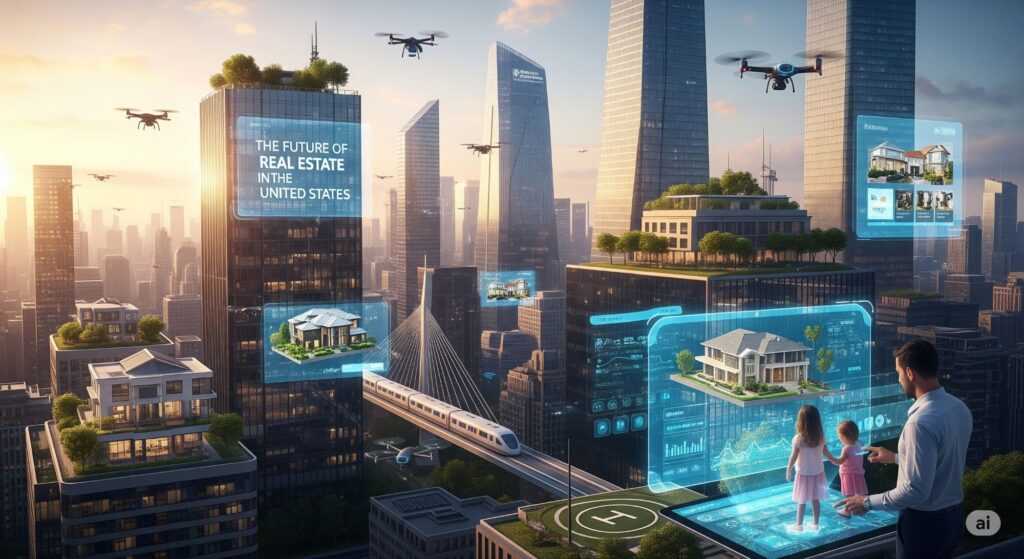
Introduction to U.S. Real Estate
The real estate sector in the United States is a trillion-dollar industry and one of the largest asset classes in the world. The market has historically offered stability, consistent growth, and attractive returns, making it an essential component of personal wealth and institutional portfolios. The U.S. market is diverse, ranging from high-rise apartments in New York City to sprawling suburban communities in Texas, and from tech-driven offices in Silicon Valley to industrial warehouses in the Midwest.
In recent years, real estate has undergone significant shifts influenced by factors such as remote work, rising housing prices, generational shifts in home buying, and advancements in PropTech (property technology). To understand the future of real estate in the United States, it is essential to examine current market trends and what they mean for investors, developers, and consumers.
Residential Real Estate Trends
The U.S. residential real estate sector remains the most significant portion of the market. Housing demand continues to grow, driven by population increases, urbanization, and the millennial generation entering their peak home-buying years.
Key Residential Trends:
- Remote Work and Suburban Growth – With remote and hybrid work models becoming mainstream, there has been a shift from dense urban centers to suburban and even rural areas. Families are looking for more space, affordability, and better quality of life outside big cities.
- Affordable Housing Challenges – Despite rising demand, affordability remains a critical issue. Many cities like San Francisco, Los Angeles, and New York face housing shortages, pushing younger buyers toward smaller cities or rental housing.
- Rise of Multifamily Rentals – As home prices increase, the rental market is booming. Multifamily housing projects are expanding, particularly in Sun Belt cities like Austin, Dallas, and Charlotte.
- Sustainable and Smart Homes – Buyers are increasingly prioritizing eco-friendly features such as solar panels, energy-efficient appliances, and smart home technologies.
- Generational Shifts – Millennials and Gen Z are reshaping the housing market with different preferences, valuing convenience, technology, and community-driven neighborhoods.
Commercial Real Estate Trends
Commercial real estate in the U.S. has faced major changes due to the pandemic and digitalization. While traditional office spaces have struggled, other sectors like logistics and healthcare real estate are thriving.
Key Commercial Trends:
- Office Spaces and Hybrid Work – The demand for traditional office space has declined as companies adopt flexible work models. Instead, there is growth in co-working spaces and smaller, flexible office hubs.
- E-Commerce and Industrial Growth – The rise of online shopping has fueled unprecedented demand for industrial real estate, particularly warehouses, distribution centers, and last-mile delivery hubs.
- Retail Shifts – Brick-and-mortar retail continues to evolve, with experiential retail (entertainment, dining, and interactive shopping) replacing traditional formats. Prime locations are adapting with mixed-use developments.
- Healthcare and Life Sciences Real Estate – Medical offices, biotech labs, and life science campuses are among the fastest-growing asset classes due to the increasing demand for healthcare innovation.
- Hospitality Real Estate Recovery – Hotels and resorts are gradually recovering as travel resumes, but the sector remains highly sensitive to global economic conditions.
Technological Impact on Real Estate
Technology, also known as PropTech, is revolutionizing how properties are bought, sold, and managed in the U.S.
Major Tech Innovations:
- Virtual Tours & Augmented Reality (AR) – Buyers can now explore properties remotely, reducing barriers in decision-making.
- Blockchain & Smart Contracts – These technologies simplify real estate transactions, making them faster, more secure, and transparent.
- Artificial Intelligence & Big Data – AI-driven analytics help investors predict market trends, optimize pricing, and assess risks.
- Smart Buildings – The integration of IoT (Internet of Things) in residential and commercial spaces improves energy efficiency, security, and convenience.
- Crowdfunding & Fractional Ownership – Technology has opened new doors for small investors to participate in real estate through crowdfunding platforms.
Investment Opportunities in U.S. Real Estate
The U.S. market continues to offer diverse investment opportunities across asset classes.
Top Investment Avenues:
- Residential Rentals – With high demand and limited supply, rental properties in growing cities remain a solid investment.
- Industrial Warehouses – The logistics boom ensures long-term stability and strong rental yields.
- REITs (Real Estate Investment Trusts) – For investors seeking liquidity, REITs provide exposure to real estate without direct property ownership.
- Vacation Rentals – Short-term rental platforms like Airbnb have created a lucrative niche for investors in tourist hotspots.
- Mixed-Use Developments – Combining residential, commercial, and retail spaces in one project increases profitability and demand.
Challenges Facing U.S. Real Estate
Despite opportunities, the industry faces several challenges:
- Affordability Crisis – Rising home prices and mortgage rates make ownership difficult for many Americans.
- Regulatory Hurdles – Zoning laws, permits, and government regulations slow down development.
- Economic Uncertainty – Recession fears, inflation, and interest rate hikes can impact real estate investment.
- Climate Change Risks – Properties in coastal areas face increased risks of flooding, hurricanes, and wildfires, affecting long-term value.
- Technological Disruption – While beneficial, rapid tech adoption can leave traditional investors behind.
The Future Outlook
The future of U.S. real estate looks promising but requires adaptation to new realities. Suburban growth, sustainable housing, and industrial real estate will continue to drive the market. Technology will play a pivotal role, making transactions faster, more secure, and more accessible. Investors must remain flexible and forward-thinking to capitalize on opportunities while navigating risks.
By 2030, we can expect:
- Greater adoption of green building standards and sustainable infrastructure.
- Expansion of affordable housing initiatives to combat the affordability crisis.
- Growth of secondary and tertiary cities as remote work spreads demand beyond major metros.
- Increasing popularity of shared living and co-working spaces.
- Strong demand for industrial and healthcare real estate driven by e-commerce and medical advancements.
Conclusion
The U.S. real estate market is at a turning point, shaped by shifting demographics, economic changes, and technology. While challenges like affordability and climate risks remain, the industry offers immense opportunities for those who adapt to evolving trends. Whether in residential, commercial, or industrial real estate, the future will be defined by innovation, sustainability, and flexibility. For investors, developers, and homebuyers, the key to success lies in understanding these dynamics and positioning themselves for long-term growth in one of the world’s most resilient real estate markets.
Discover more from Dream Property 99
Subscribe to get the latest posts sent to your email.
